
Loading...
Serving Frankfort, IN and surrounding areas. (765) 650-7986
Stop erosion, create usable yard space, and protect your foundation with a concrete retaining wall built for Indiana winters.
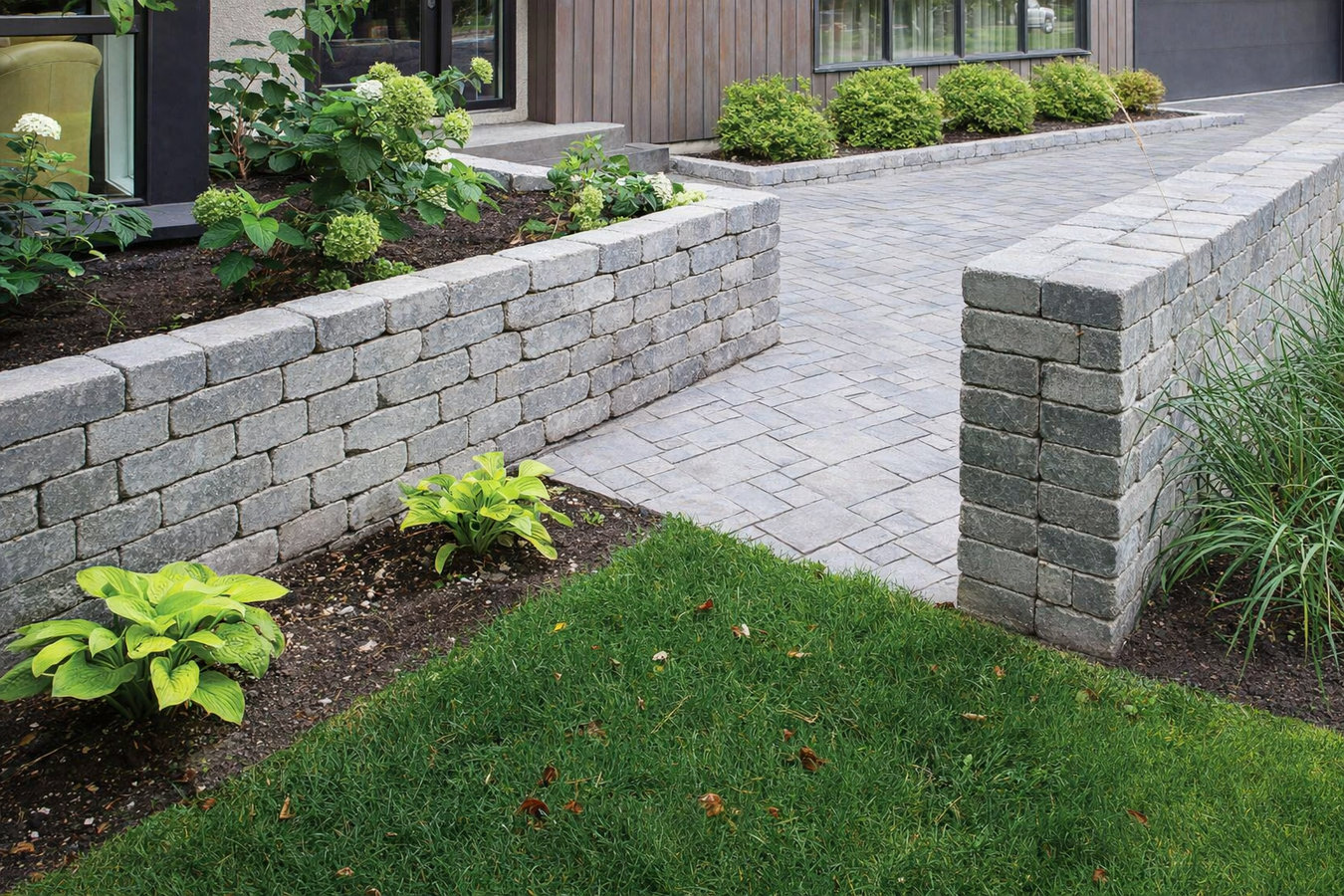
Concrete retaining walls in Frankfort, IN hold back soil on sloped or uneven ground, stopping erosion and turning an awkward slope into flat, usable yard space - most residential projects take one to three days to build, with a few additional days for curing before backfill.
If your yard has a slope that washes out every spring, or you lose topsoil after every heavy rain, a retaining wall solves the problem at the source. Many Frankfort homeowners discover that leveling even a modest slope opens up room for a patio, a garden, or simply a yard the whole family can use. If you are also considering outdoor living upgrades, our concrete floor installation service pairs well with a finished wall project.
A wall that looks good on day one but lacks proper drainage and frost-depth footings will lean, crack, or fail within a few years in Indiana's climate. Getting the details right from the start is the only thing that matters.
If you notice topsoil moving downhill after heavy rains, bare patches forming on a slope, or mulch ending up at the bottom of your yard, your slope is actively eroding. In Frankfort's wet springs, this kind of erosion can accelerate quickly and eventually undermine nearby structures.
If a significant portion of your yard is too steep to mow safely, too uneven to use, or just wasted space because of grade changes, a retaining wall can turn that slope into flat, functional ground. Many Frankfort homeowners find that leveling even a modest slope opens up real usable space.
A wall that is visibly tilting forward, showing horizontal cracks, or has gaps opening at the joints is under stress it was not built to handle. Left alone, a leaning wall will eventually fail - often suddenly - and the soil behind it will come with it.
If rainwater or snowmelt consistently collects against your house or garage, a poorly graded slope may be directing water toward your foundation. A retaining wall combined with proper grading can redirect that water and protect your home from moisture damage - a real concern after Indiana's heavy spring rains.
We build both poured concrete walls and concrete block walls, and we help you choose based on your site, slope, and budget. Poured walls are formed and filled in one continuous pour - no joints for water to infiltrate - making them ideal when strength and a clean, monolithic look matter. A block retaining wall is built course by course, which makes it a good fit for irregular terrain or tighter access situations. Both include proper drainage: gravel backfill and a drainage pipe behind the wall are standard, not optional. For projects where steps down the slope are part of the plan, we can coordinate with our concrete steps construction work to tie the whole project together.
Every wall we build is designed for Indiana's freeze-thaw cycles: footings below the frost line, the right concrete mix for this climate, and drainage that handles Frankfort's heavy spring rains without building up pressure against the wall. A retaining wall is not just a landscaping feature - it is a structural element that protects your property for decades.
Best for homeowners who want maximum strength and a clean, seamless finish with no joints for water to work into.
Ideal for sloped or irregular sites where block-by-block placement allows more flexibility on uneven terrain.
For clay-heavy Frankfort soils where gravel backfill and drain pipe behind the wall are essential, not optional.
For homeowners who want a complete solution - a retaining wall with built-in steps connecting different yard levels.
Frankfort sits in central Indiana where winters bring repeated freeze-thaw cycles from roughly November through March. Every time water in the soil behind a wall freezes, it expands and pushes against the wall; when it thaws, it contracts. Over many seasons, this pressure is one of the leading causes of wall failure in this region. Clinton County soils are also heavy with clay, which holds water rather than draining it away - saturated clay soil behind a wall becomes very heavy and dramatically increases the load on the structure. These two factors together mean a wall built without proper drainage and frost-depth footings will not last in this part of Indiana, no matter how good it looks on installation day. Homeowners in Delphi, IN and across the region face the same conditions.
Spring is the season when poorly built walls show their problems. Frankfort typically sees its heaviest rainfall in spring, which coincides with the ground thawing and becoming saturated - the worst possible combination for a wall with inadequate drainage. The practical working window for new concrete retaining walls in this area runs from mid-spring through mid-fall, which is why getting on a contractor's schedule early in the season matters. Homeowners in Lafayette, IN face identical seasonal considerations when planning retaining wall projects.
Describe the wall you need - approximate length, height, and any nearby structures or drainage concerns. We reply within one business day and schedule a site visit to measure, assess the slope and soil, and give you a written quote.
We assess the slope, soil conditions, and drainage needs in person, then determine whether a permit is required. For walls above the local height threshold, we pull the permit from the building department as part of the job - no extra steps for you.
The crew excavates, compacts a gravel base for the footing, and stages drainage materials. Gravel backfill and drain pipe are installed as the wall goes up - not as an afterthought. Clear the area of anything you want to protect before this day.
The wall is formed, poured or set, and drainage is completed. After the concrete cures - typically several days - the area behind the wall is backfilled and graded. We walk you through the finished work and show you where the drainage outlet is located.
Get a free on-site estimate for your concrete retaining wall in Frankfort. No pressure - just a clear, written quote.
(765) 650-7986We set every retaining wall footing below the local frost line - not to meet a minimum, but because a footing that is too shallow will fail in central Indiana winters. You should ask any contractor you consider exactly how deep they plan to set the footing and why.
Gravel backfill and a perforated drain pipe behind the wall are installed as part of every project we build - not as an upgrade. In Frankfort's clay soils and wet springs, drainage is the single biggest factor in whether a wall stands for decades or starts leaning after a few seasons. The American Society of Concrete Contractors (ASCC) at ascconline.org sets the best practices we follow.
We have served the Frankfort area since 2020 and know exactly when a permit is required for retaining walls in Clinton County. We pull the permit and coordinate inspections as part of the job - so there are no surprises about timeline or cost after the contract is signed.
Every project starts with a written contract that spells out scope, materials, drainage plan, and warranty. You know what is happening on your property, when, and why - no mystery about what is included and no crew disappearing mid-job.
Every wall we build is designed to handle what Indiana winters throw at it - not just look good on day one. When you call us, you get a contractor who knows Frankfort's soils, understands the permit process, and treats drainage as a structural requirement, not an optional feature.
New concrete floors for basements, garages, and utility spaces - built with a proper base and vapor barrier for Indiana's clay soils.
Learn MoreConcrete steps that connect different yard or property levels, often designed to complement a retaining wall project.
Learn MoreBeat the spring rush - get on our calendar now before the busy season fills up and slots are gone.